How Much Protein Per Day Do You Need? A Table by Body Weight
By the DietX team · Updated · 6 min read
How much protein you need per day depends mostly on your weight and how active you are. The RDA (recommended dietary allowance) for adults is 0.8 g per kg of body weight, and for people who exercise, 1.4 to 2.0 g per kg is enough for most. At 70 kg, that's 56 g a day as the baseline and 98 to 140 g if you train.
How much protein per day? A table by body weight
| Your weight | RDA (0.8 g/kg) | If you exercise (1.4 to 2.0 g/kg) |
|---|---|---|
| 60 kg (132 lb) | 48 g | 84 to 120 g |
| 70 kg (154 lb) | 56 g | 98 to 140 g |
| 80 kg (176 lb) | 64 g | 112 to 160 g |
| 90 kg (198 lb) | 72 g | 126 to 180 g |
If you think in pounds, 0.8 g per kg is about 0.36 g per lb, and 1.4 to 2.0 g per kg is about 0.64 to 0.91 g per lb.
Why the numbers are so different
These figures answer two different questions, which is why they're so far apart.
The RDA is set to cover the basic needs of nearly all healthy adults. It's a floor for health, and it was never meant as a target for building strength. You may also see it as a share of calories: the WHO says protein at 10 to 15% of energy is generally sufficient for adults, which is 50 to 75 g on 2,000 kcal.
The 1.4 to 2.0 g per kg range comes from a position stand by the International Society of Sports Nutrition, and it's aimed at people who exercise. If you lift weights or train hard several times a week, this is the column to read. If you walk a few times a week, somewhere between the two columns is reasonable, and you don't have to hit an exact figure.
One thing to watch: those g per kg figures can look very high if you have a lot of weight to lose. A common workaround is to use your goal weight rather than your current one, and a dietitian can help you pick a number.
How much protein to lose weight?
Protein earns its place when you're eating less. A review of higher-protein diets found that in shorter controlled trials, they led to more weight and fat loss and more lean mass kept, with a modest effect on fullness. Long-term results depended on sticking with the diet, so a target you can keep up beats a heroic one.
For most people in a calorie deficit, the 1.4 to 2.0 g per kg range is a practical aim if you're exercising. The same position stand says 2.3 to 3.1 g per kg may help resistance-trained people keep lean mass while dieting. That's a niche case: at 70 kg it means 161 to 217 g a day, which on 1,800 kcal is 36 to 48% of your calories, above the 35% upper end of the usual range. You can also run into the same limit at 2.0 g per kg: at 90 kg that's 180 g, or 40% of 1,800 kcal. If your number crowds out everything else, come down to the lower end.
More protein doesn't cancel out too few calories. Please don't use a protein target as a reason to restrict hard, and keep your intake above about 1,200 kcal. Our guide to how to track macros shows how protein fits with carbs and fat.
What a day of protein looks like
Here's a day for a 70 kg person aiming for about 1.6 g per kg (112 g), using USDA values for the prepared state shown:
| Meal | Food | Protein | Calories |
|---|---|---|---|
| Breakfast | 170 g nonfat Greek yogurt, 40 g dry oats | 24.1 g | 256 kcal |
| Lunch | 100 g roasted chicken breast, 150 g cooked quinoa | 37.6 g | 345 kcal |
| Snack | 100 g 2% cottage cheese, 15 g dry-roasted almonds | 13.7 g | 171 kcal |
| Dinner | 100 g cooked salmon, 150 g boiled lentils | 35.6 g | 380 kcal |
| Total | 111.0 g | 1,152 kcal |
That's 111 g of protein for 1,152 kcal, which leaves plenty of room for fruit, vegetables, cooking fat and more carbs. It isn't a full day of eating, and it isn't a calorie target. It only shows that a higher protein target is doable with ordinary food.
Now compare the RDA. For the same person, 56 g is covered by 100 g of chicken breast (31.0 g), 200 g of nonfat Greek yogurt (20.4 g) and 40 g of dry oats (6.8 g), which comes to 58.2 g. If you eat meat and dairy, you may already be close to that without trying.
How much protein is in common foods?
These are the USDA figures per portion:
| Portion | Protein | Calories |
|---|---|---|
| 100 g roasted chicken breast | 31.0 g | 165 kcal |
| 100 g canned light tuna in water | 19.4 g | 86 kcal |
| 50 g hard-boiled egg | 6.3 g | 78 kcal |
| 150 g nonfat Greek yogurt | 15.3 g | 89 kcal |
| 150 g firm tofu | 26.0 g | 216 kcal |
| 150 g boiled lentils | 13.5 g | 174 kcal |
Our full list of high protein foods ranks them by protein per 100 kcal, and our guide to vegetarian and vegan protein covers days built from plants.
How to hit your protein target
- Pick a number you can live with. Start with the low end of your range, and move up if it feels easy.
- Put a protein food in every meal. Reaching 112 g over four meals and snacks is about 28 g each. Reaching it in one dinner is a lot harder.
- Start at breakfast. It's an easy meal to leave low in protein, and a yogurt or eggs change the whole day's math.
- Plan your main protein first. Build the rest of the meal around it.
- Log it for a week or two. A short spell of logging teaches you what a portion really holds.
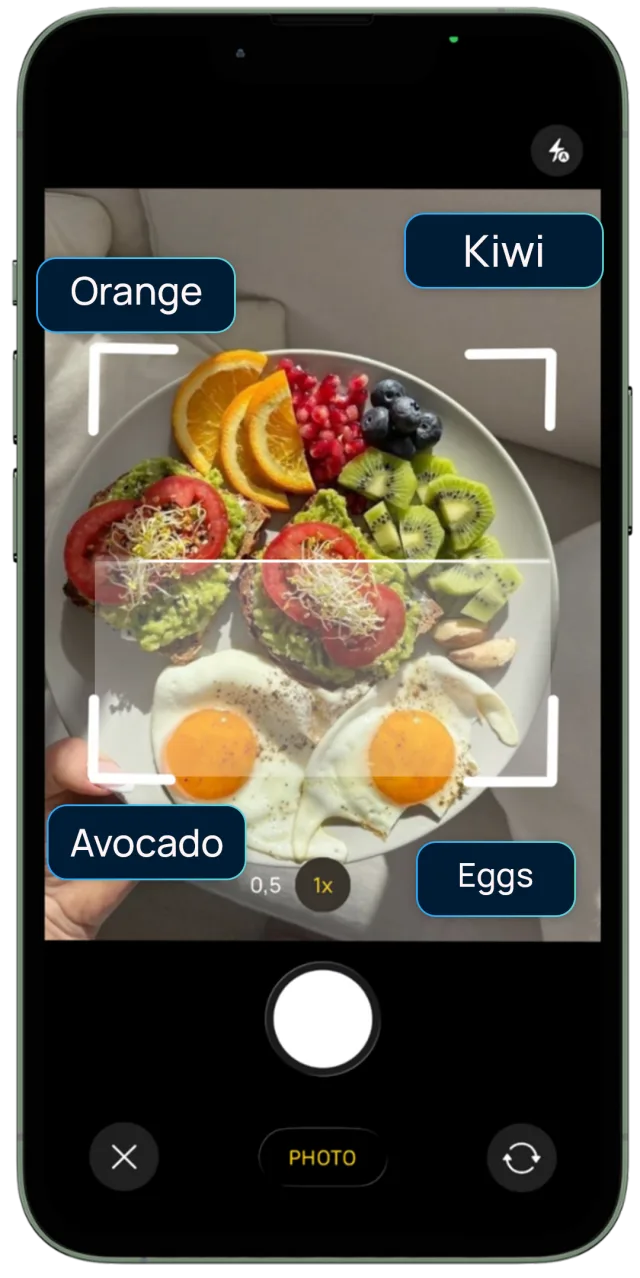
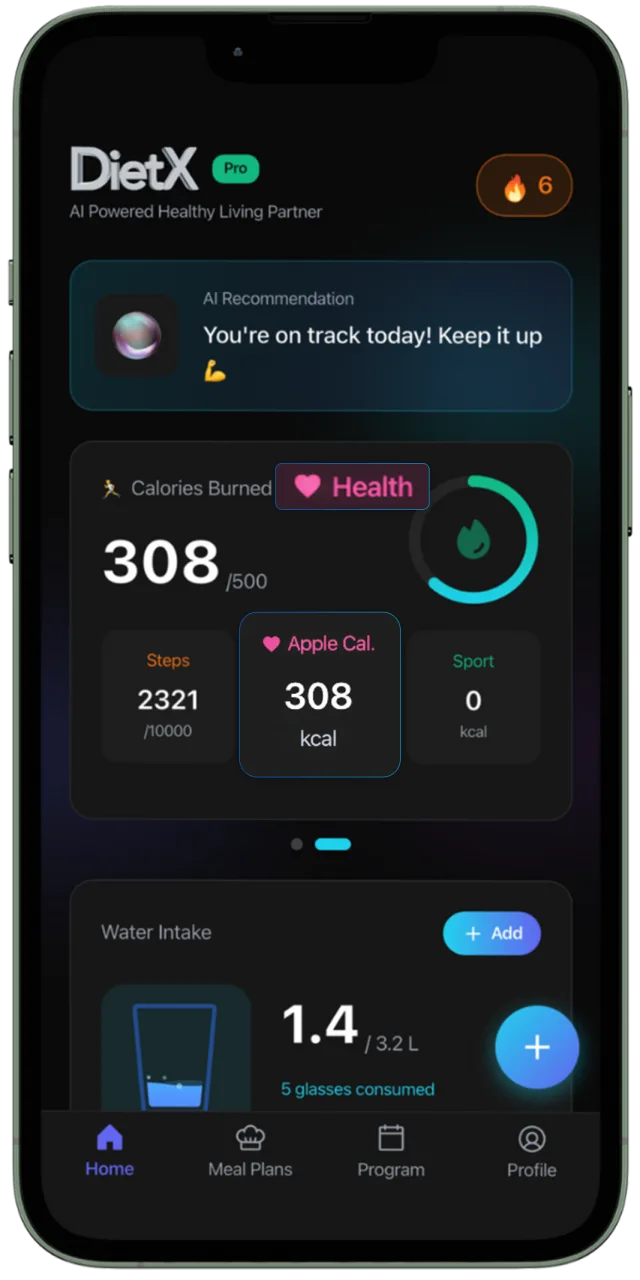
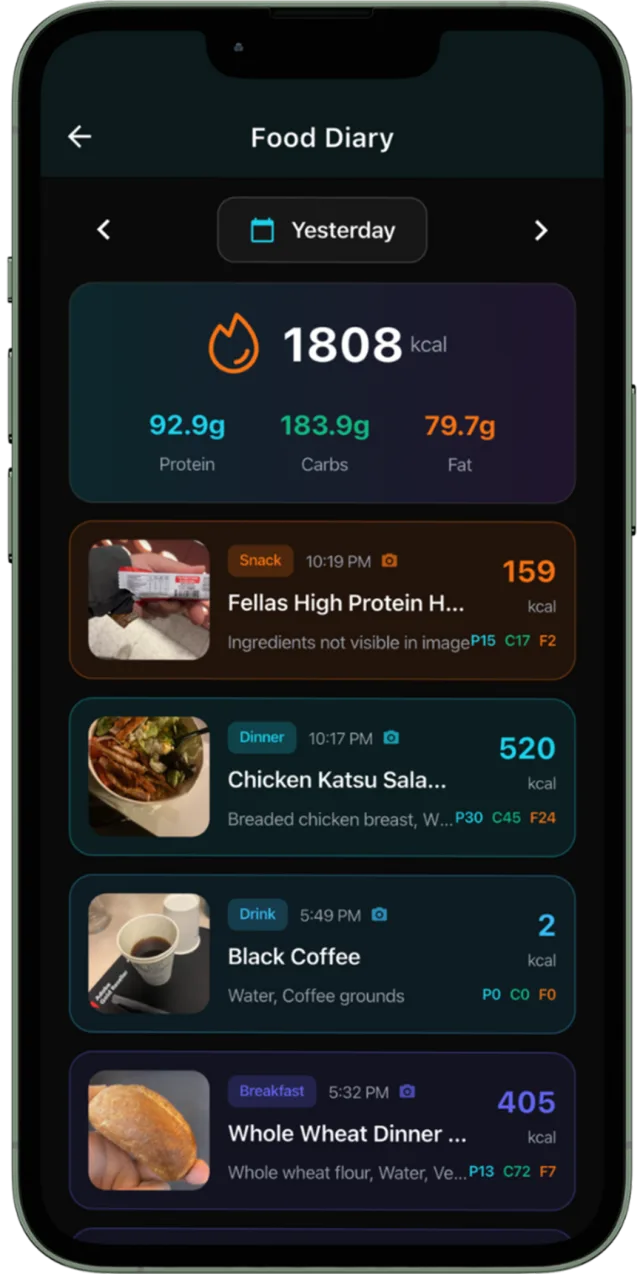
The last step is where an app helps. DietX estimates calories, protein, carbs and fat from a photo, a description, your voice or a barcode, and gives you a daily macro target from your age, height, weight, activity level and goal. It's free to download with a free trial, and Premium is a subscription. Estimates can vary, so edit anything that looks off.
When to be careful with protein
If you have kidney disease or another medical condition, ask your doctor or a dietitian before raising your protein, since your needs may be different. The same goes if you're pregnant or breastfeeding.
Calorie and macro tracking isn't for everyone, either. If it makes you anxious, it's fine to drop the numbers and simply include a protein food at each meal, and the NHS has advice on where to find help with eating problems.
Frequently asked questions
How much protein do I need per day?
The RDA for adults is 0.8 g per kg of body weight, which is 56 g at 70 kg. For people who exercise, 1.4 to 2.0 g per kg is enough for most, which is 98 to 140 g at 70 kg.
How much protein per kg should I eat to lose weight?
If you are exercising, 1.4 to 2.0 g per kg is a practical range. In shorter controlled trials, higher-protein diets led to more weight and fat loss and more lean mass kept, but long-term results depend on sticking with the diet.
Is 100 g of protein a day too much?
For most healthy adults, no. It falls within the usual range for someone who exercises and weighs 50 to 70 kg, and it is about 22% of calories on 1,800 kcal. If you have kidney disease or another medical condition, ask your doctor first.
How much protein is in a chicken breast?
Roasted chicken breast has about 31 g of protein per 100 g, at 165 kcal, according to USDA data. Weigh it cooked to match that figure, since raw meat weighs more and has less protein per 100 g.
Can I get enough protein without meat?
Yes. Tofu, lentils, beans and chickpeas all help, and if you are vegetarian, so do Greek yogurt, cottage cheese and eggs. Plant sources usually bring more calories per gram of protein, so it takes some planning.
Sources
- National Academies: Dietary Reference Intakes for energy and macronutrients
- Jäger et al. (2017), J Int Soc Sports Nutr: ISSN position stand on protein and exercise
- WHO: Healthy diet
- Leidy et al. (2015), Am J Clin Nutr: The role of protein in weight loss and maintenance
- USDA FoodData Central (SR Legacy)
- NHS: Eating disorders
General information, not medical advice. Talk to a doctor or dietitian before changing your diet, especially if you are pregnant, under 18 or have a health condition. If tracking food makes you anxious or you have a history of disordered eating, please skip calorie counting and ask a professional for support.