Vegan and Vegetarian Calorie Counting: Protein, Macros, Logging
By the DietX team · Updated · 8 min read
Vegan and vegetarian calorie counting works the same way as any other: the target and the math don't change. The difference is that plant protein tends to bring more calories with it. Per 100 kcal, firm tofu gives about 12.0 g of protein, lentils 7.8 g and chickpeas 5.4 g, compared with 18.8 g for chicken breast, according to USDA data. So plan protein first, and take extra care logging mixed dishes.
Vegetarian and vegan protein: what's in each food
These are USDA values per 100 g, for the prepared state shown. Beans and lentils are boiled, so weigh them cooked if you use these numbers.
| Plant food | Calories | Protein | Protein per 100 kcal | Carbs | Fiber |
|---|---|---|---|---|---|
| Tofu, firm | 144 kcal | 17.3 g | 12.0 g | 2.8 g | 2.3 g |
| Lentils, boiled | 116 kcal | 9.0 g | 7.8 g | 20.1 g | 7.9 g |
| Black beans, boiled | 132 kcal | 8.9 g | 6.7 g | 23.7 g | 8.7 g |
| Chickpeas, boiled | 164 kcal | 8.9 g | 5.4 g | 27.4 g | 7.6 g |
| Whole-wheat bread | 252 kcal | 12.5 g | 5.0 g | 42.7 g | 6.0 g |
| Oats, dry | 389 kcal | 16.9 g | 4.3 g | 66.3 g | 10.6 g |
| Peanut butter | 598 kcal | 22.2 g | 3.7 g | 22.3 g | 5.0 g |
| Quinoa, cooked | 120 kcal | 4.4 g | 3.7 g | 21.3 g | 2.8 g |
| Almonds, dry roasted | 598 kcal | 21.0 g | 3.5 g | 21.0 g | 10.9 g |
If you eat eggs and dairy, you have some easier options:
| Vegetarian food | Calories | Protein | Protein per 100 kcal |
|---|---|---|---|
| Greek yogurt, plain nonfat | 59 kcal | 10.2 g | 17.3 g |
| Cottage cheese, 2% | 81 kcal | 10.5 g | 13.0 g |
| Egg, hard-boiled | 155 kcal | 12.6 g | 8.1 g |
| Milk, 1% | 42 kcal | 3.4 g | 8.1 g |
| Cheddar, sharp | 410 kcal | 24.3 g | 5.9 g |
Nonfat Greek yogurt and cottage cheese do most of the heavy lifting here. Cheddar has a lot of protein per 100 g, but it's a high-calorie way to get it. Our full list of high protein foods puts all of these side by side with meat and fish.
Vegan macros: what changes
Your targets don't change just because your food does. The adult ranges are still 45 to 65% of calories from carbs, 20 to 35% from fat and 10 to 35% from protein, and the protein RDA is 0.8 g per kg of body weight. For people who exercise, 1.4 to 2.0 g per kg is enough for most. See how much protein you need per day for a table by weight, and how to track macros for the full method.
What changes is what comes along with the protein. Here's what 100 kcal of each gives you:
| 100 kcal of | Amount | Protein | Carbs | Fat |
|---|---|---|---|---|
| Firm tofu | 69 g | 12.0 g | 1.9 g | 6.0 g |
| Boiled lentils | 86 g | 7.8 g | 17.3 g | 0.3 g |
| Boiled black beans | 76 g | 6.7 g | 18.0 g | 0.4 g |
| Boiled chickpeas | 61 g | 5.4 g | 16.7 g | 1.6 g |
So beans and lentils count as protein and as carbs. If lentils are your protein at dinner, you may want less rice beside them. Tofu brings fat instead, so go easy on the oil in the pan.
The calorie cost of protein shows the same pattern. Getting 25 g of protein takes about 208 kcal from firm tofu, 322 kcal from lentils and 461 kcal from chickpeas. It takes about 673 kcal from peanut butter, so count that one as a fat source that brings some protein.
A sample vegan day
Here is one day for a 70 kg person, at 1,670 kcal. It's an illustration and not a recommendation, since your calories depend on your body and activity. All values are from the USDA data above.
| Meal | Food | Calories | Protein |
|---|---|---|---|
| Breakfast | 60 g dry oats, 15 g chia seeds, 100 g banana | 395 kcal | 14 g |
| Lunch | 200 g boiled lentils, 150 g cooked quinoa, 100 g tomato, 100 g spinach, 5 g olive oil | 497 kcal | 28 g |
| Snack | 150 g apple, 20 g dry-roasted almonds | 198 kcal | 5 g |
| Dinner | 200 g firm tofu, 150 g cooked white rice, 150 g boiled broccoli, 5 g olive oil | 580 kcal | 42 g |
| Total | 1,670 kcal | 89 g |
That's well above the RDA for this person (56 g), and it comes to about 1.3 g per kg. If they train and want to reach 1.4 g per kg (98 g), 50 g of whole-wheat bread with 20 g of peanut butter adds about 246 kcal and 11 g of protein, taking the day to about 100 g at about 1,916 kcal. Mixing beans, soy, grains and nuts through the day is the usual advice, and this day does that without any special products.
Nutrients to watch
Calories and macros don't cover everything on a plant-based diet. The NHS says vegans should plan for these, and that supplements or fortified foods may be needed:
- Calcium
- Iron
- Vitamin B12
- Vitamin D
- Iodine
- Selenium
The NHS has a separate guide for vegetarians too. If you're unsure where you stand, a doctor or dietitian can check, and that's especially worth doing if you're pregnant, breastfeeding or have a medical condition.
Most calorie trackers focus on calories and macros, so they won't show you these. If you want to watch them day to day, you'll need a tool built for it: Cronometer's free plan includes micronutrient targets, as of November 2026.
How to log mixed dishes
Stews, curries and dals are the hardest part of plant-based tracking. Everything is blended together, so neither a photo nor a guess can tell how much oil went in. For anything you cook at home, log the whole pot once:
- Write down everything that goes in, and measure the oil.
- Add it up.
- Divide by the number of servings, or weigh the finished pot and work per 100 g.
Here's a lentil stew for four, using USDA values:
| Ingredient | Calories | Protein | Carbs | Fat |
|---|---|---|---|---|
| Lentils, boiled, 600 g | 696 kcal | 54.0 g | 120.6 g | 2.4 g |
| Tomato, 400 g | 72 kcal | 3.6 g | 15.6 g | 0.8 g |
| Spinach, 200 g | 46 kcal | 5.8 g | 7.2 g | 0.8 g |
| Olive oil, 20 g | 177 kcal | 0 g | 0 g | 20.0 g |
| Whole pot | 991 kcal | 63.4 g | 143.4 g | 24.0 g |
| One of 4 servings | about 248 kcal | about 16 g | about 36 g | 6 g |
Notice the oil: it's 18% of the pot's calories, or about 44 kcal a serving, and it's invisible in the bowl. If the finished stew weighs 1,200 g, that's about 83 kcal per 100 g, which is handy when people take different portions.
For dishes you didn't make, describe what you can: the dish, the portion, and whether it looked oily or creamy. Our guide to logging food by voice has examples of how to describe a meal well.
Common mistakes
- Treating nuts and nut butters as protein foods. They help, but they're mostly fat. Weigh them.
- Assuming plant-based means low calorie. Avocado has 160 kcal per 100 g, and oil is 884 kcal per 100 g, whatever the rest of the plate looks like.
- Mixing up raw and cooked. White rice is 365 kcal per 100 g raw and 130 kcal cooked, and dry beans and lentils shift the same way.
- Trusting one plant-milk or meat-alternative entry. Products vary widely, so scan or read the actual label.
- Rice and vegetables with no protein. White rice gives only 2.1 g of protein per 100 kcal, so add tofu or beans.
Calorie counting isn't for everyone. If it makes you anxious, or you have a history of disordered eating, please look for support. If you're using it to lose weight, avoid extreme restriction and stay above about 1,200 kcal a day.
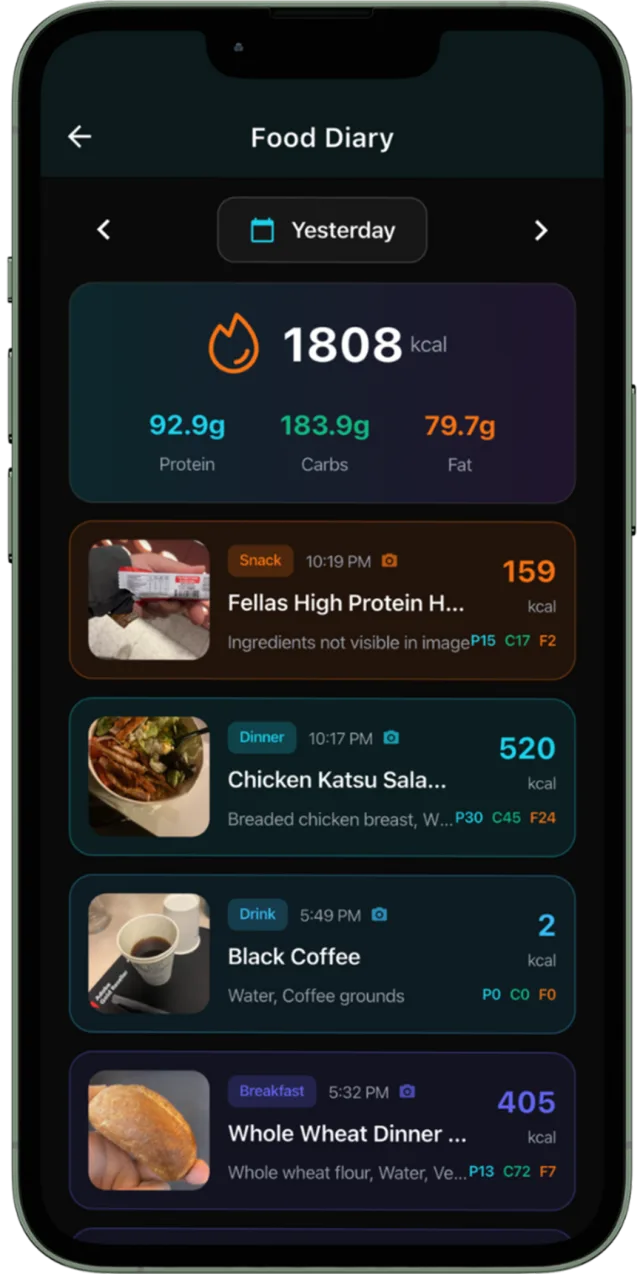
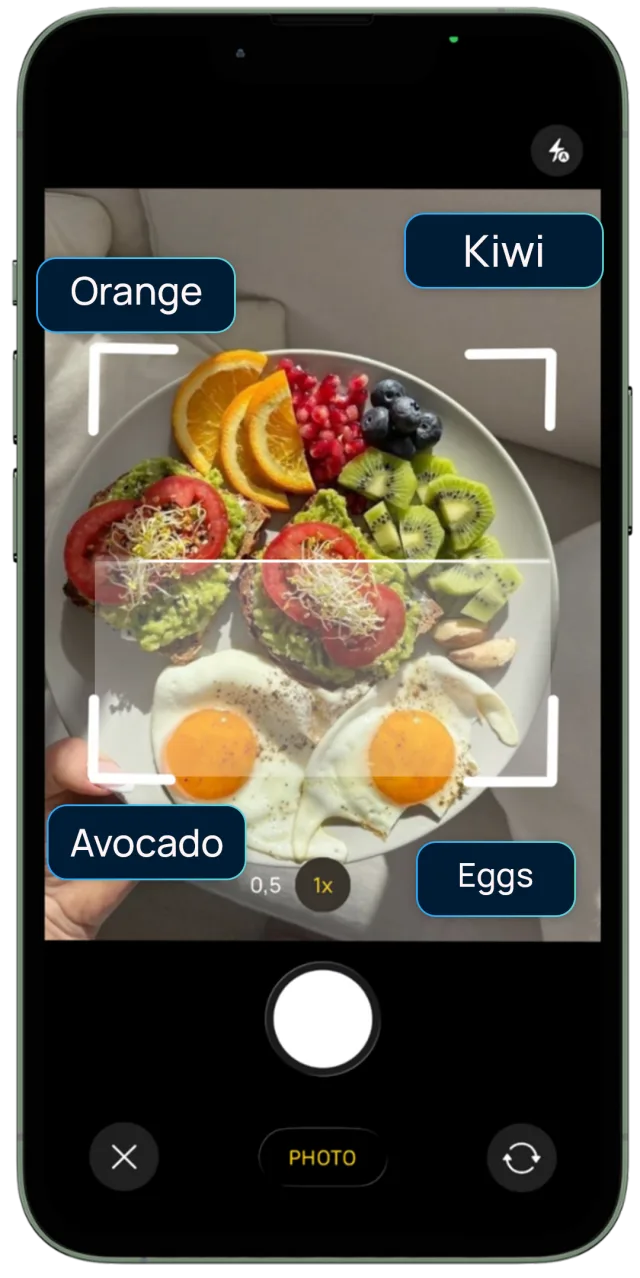
DietX takes vegetarian, vegan and other preferences into account when it builds personal meal plans and recipes, and its AI Cook finds recipes from YouTube. You can log by photo, description, voice or barcode, and edit any item, which helps with mixed dishes. It's free to download with a free trial, and Premium is a subscription.
Frequently asked questions
How do vegans get enough protein?
Plan it first. Firm tofu, lentils, beans and chickpeas are the main sources, with oats, whole-wheat bread and nuts adding more. A day with tofu at dinner and lentils at lunch can reach about 89 g of protein at 1,670 kcal.
What macros should a vegan eat?
The same ranges as anyone else: 45 to 65% of calories from carbs, 20 to 35% from fat and 10 to 35% from protein. Beans and lentils also supply a lot of carbs, so you may land toward the higher end of the carb range.
Which vegetarian foods have the most protein?
Per calorie, nonfat Greek yogurt (17.3 g per 100 kcal) and 2% cottage cheese (13.0 g) lead, followed by firm tofu (12.0 g). Eggs and 1% milk give about 8.1 g per 100 kcal.
How do I count calories in a homemade curry or dal?
Add up every ingredient, including the oil, and divide by the number of servings. Or weigh the finished pot and work out the calories per 100 g, which helps when people take different portions.
Do vegans need supplements?
They may. The NHS says vegans should plan for calcium, iron, vitamin B12, vitamin D, iodine and selenium, and that supplements or fortified foods may be needed. A doctor or dietitian can advise you on what you need.
Sources
- USDA FoodData Central (SR Legacy)
- National Academies: Dietary Reference Intakes for energy and macronutrients
- Jäger et al. (2017), J Int Soc Sports Nutr: ISSN position stand on protein and exercise
- NHS: The vegan diet
- NHS: The vegetarian diet
- Cronometer: Gold
- NHS: Eating disorders
General information, not medical advice. Talk to a doctor or dietitian before changing your diet, especially if you are pregnant, under 18 or have a health condition. If tracking food makes you anxious or you have a history of disordered eating, please skip calorie counting and ask a professional for support.