Calorie Counting Mistakes: 7 Common Ones and How to Fix Them
By the DietX team · Updated · 6 min read
Common calorie counting mistakes include missing cooking oil and drinks, mixing up raw and cooked weights, and overrating exercise. One tablespoon of olive oil is about 13.5 g, which comes to about 120 kcal (USDA data), so a few small misses can add up to hundreds of calories a day. If calorie counting doesn't seem to work for you, check these before you blame your metabolism or cut your food further.
7 common calorie counting mistakes
Food values below come from USDA FoodData Central, for the prepared state shown.
1. Not counting cooking oil
Olive oil has 884 kcal per 100 g. One tablespoon is about 120 kcal, and a free pour from the bottle can easily be two tablespoons, or about 240 kcal. Butter has 717 kcal per 100 g, so 10 g is about 72 kcal.
Fix: Measure fat with a spoon, at least for a while, and log it. If you cook for several people, divide it by the number of portions.
2. Forgetting drinks
Drinks don't feel like food, so they slip through. The NHS puts a 175 ml glass of 12% wine at up to 158 kcal and a pint of 5% beer at up to 222 kcal. Milk counts too: 250 g of whole milk is about 153 kcal. The NHS also suggests swapping sugary drinks for water if you're trying to lose weight.
Fix: Log drinks as you pour them. Our guide to calories in alcohol has more detail.
3. Mixing up raw and cooked weights
Cooking changes weight, mostly through water. White rice has 365 kcal per 100 g raw and 130 kcal per 100 g cooked, and a mix-up can miss in either direction:
- 200 g of cooked rice logged as raw reads 730 kcal instead of 260, so 470 kcal too high.
- 75 g of dry rice logged as cooked reads about 98 kcal instead of about 274, so 176 kcal too low.
Fix: Pick one habit, such as weighing rice dry, and choose the entry that says the same thing. Our guide to nutrition labels shows how to spot which one a label means.
4. Skipping bites and tastes
A spoon of peanut butter while you make a sandwich, some cheese while you grate it, a few almonds from the jar. 20 g of peanut butter is about 120 kcal, 20 g of sharp cheddar is about 82 kcal, and 15 g of almonds is about 90 kcal.
Fix: Log them when they happen, or add one rough entry for bites at the end of the day.
5. Logging only the good days
It's easy to log carefully from Monday to Friday and stop for the weekend. Research on weekly weight rhythms found that weight tends to rise on weekends and fall during the week, and that those who compensate most tend to lose or maintain, so weekend bumps themselves are normal. The trouble comes when your log leaves them out.
Say your target is 1,800 kcal. Five days at 1,800 and two days at 2,800 come to 9,000 + 5,600 = 14,600 kcal, an average of about 2,086 kcal a day. Your weekday log looks perfect while your real average runs about 286 kcal over.
Fix: Log all seven days, even with rough estimates, and judge yourself on the weekly average.
6. Treating labels and menus as exact
US rules treat food as misbranded if calories run more than 20% over the label, so a label can be off and still legal. Restaurant figures vary as well. Across 269 restaurant foods, stated calories were accurate overall, with an average difference of 10 kcal a portion, but 19% had at least 100 kcal more per portion than stated. A smaller study measured 10 frozen meals at 8% above their stated calories on average.
Fix: Use these figures as close estimates and stop worrying about single digits. For meals out, see how to count calories when eating out.
7. Overrating exercise
When researchers tested 7 wrist devices, heart rate readings were decent, but no device got its energy expenditure error below 20%. So a 500 kcal reading on your watch could easily be off by 100 kcal or more. Weight loss from exercise also tends to be less than expected, because the body compensates.
Fix: Don't treat burned calories as extra food by default. If you used an activity multiplier (the number you multiply your resting burn by) to set your target, your workouts are already counted. Our guide to eating back exercise calories goes through it.
Hidden calories: how small misses add up
None of these looks like much alone. Here's an ordinary day where four small things go unlogged, using USDA and NHS figures:
| Unlogged item | Amount | kcal |
|---|---|---|
| Olive oil in the pan | 1 tbsp (13.5 g) | about 120 |
| Peanut butter off the spoon | 20 g | about 120 |
| Sharp cheddar while cooking | 20 g | about 82 |
| Glass of 12% wine | 175 ml | up to 158 |
| Total | up to about 480 |
That's simple addition, with no data on what people really eat, but it shows how a day that looks on target in the log may not be.
Why calorie counting doesn't work for some people
One possible reason is that the numbers are off, and that can happen to anyone. In a small 1992 study of 10 adults who described themselves as diet-resistant, people under-reported their food by 47% and over-reported their activity by 51%, and their metabolism wasn't the explanation. That's a tiny group of a very specific kind of person, so it doesn't tell you what's typical. It does show that self-reports can be far off.
Other explanations have nothing to do with your log:
- Water. Day-to-day weight swings can hide real progress for a while.
- A shrinking need. Weight responds slowly to a change in intake, and loss tapers off as your weight falls, so a target that worked at first may stop working.
- The target itself. Formulas give estimates, so your starting number may simply be off.
- Health or medication. Some conditions and medicines affect weight, so raise it with a doctor if you're concerned.
If you've ruled out the obvious, work through our checklist for when you're in a calorie deficit but not losing weight.
A one-week logging check
You don't need to log perfectly forever. One careful week can show you which of these mistakes are yours.
- Log every meal as you eat it, for all seven days.
- Weigh or measure the dense foods: oil, butter, nuts, cheese, rice and pasta.
- Record drinks and bites as they happen.
- At the end of the week, compare your average with your target and see what surprised you.
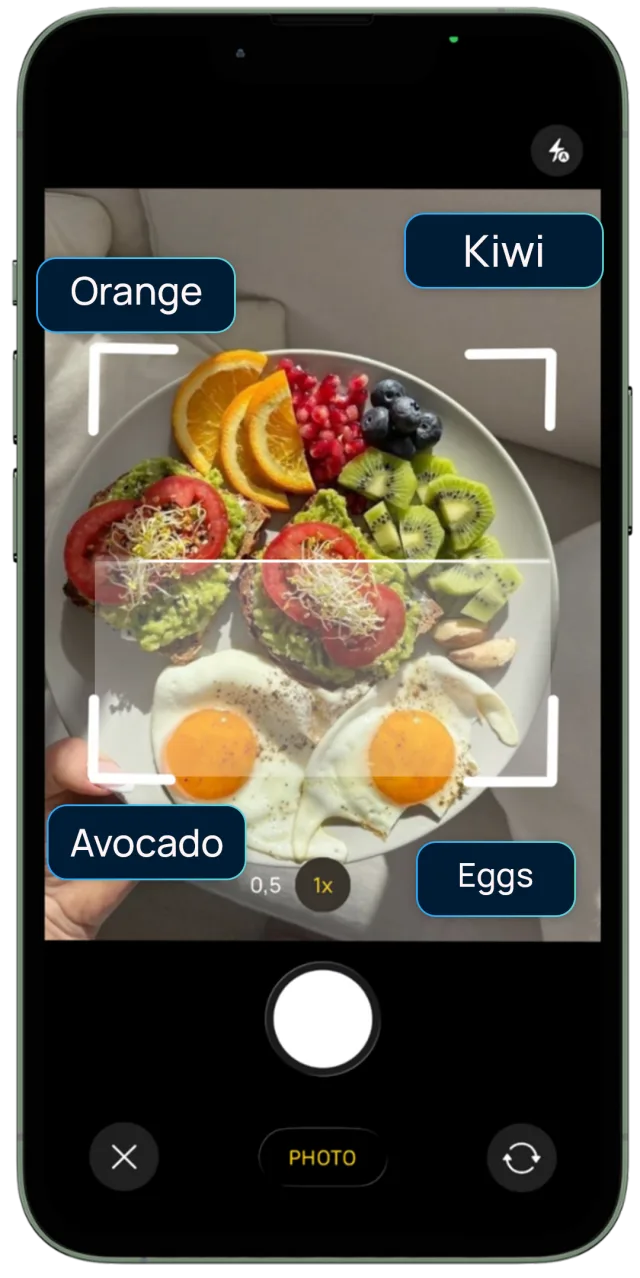
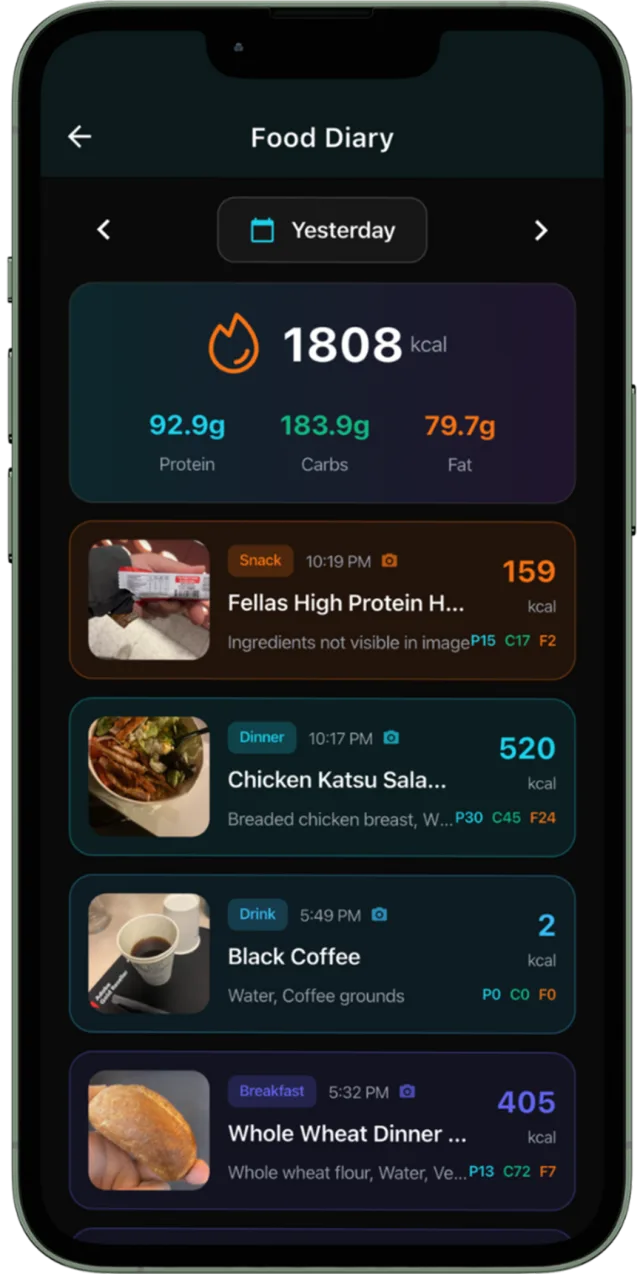
An app can make step 1 quicker. DietX lets you log by photo, description, voice or barcode and edit any item before saving, though a photo can't see the oil in your pan, so you still add that yourself. If you're starting from scratch, our beginner's guide to counting calories walks through the setup.
Frequently asked questions
Why is calorie counting not working for me?
The usual suspects are unlogged oil, drinks and bites, mixed-up raw and cooked weights, weekends left out of the log and eating back exercise calories. Water can also hide progress for a while, and your needs fall as your weight falls. If you’ve checked all that, speak to a doctor.
What are hidden calories?
Calories you eat without noticing or logging them, such as cooking oil and butter, sauces and dressings, milk and alcohol, and bites taken while cooking. One tablespoon of olive oil is about 120 kcal, and a 175 ml glass of 12% wine is up to 158 kcal according to the NHS.
Do you count calories in cooking oil?
Yes, for whatever ends up in your food. Measure it with a spoon rather than pouring from the bottle, and if you cook for several people, divide it by the number of portions.
Should I count calories raw or cooked?
Either, as long as the entry matches how you weighed it. White rice is about 365 kcal per 100 g raw and about 130 kcal per 100 g cooked, so mixing them up can throw your count off by hundreds of calories.
How accurate does calorie counting need to be?
Accurate enough to spot a trend, which doesn’t mean perfect. Labels and menus aren’t exact either. Aim to log everything honestly and consistently, and use your weekly average weight to tell you whether the log matches reality.
Sources
- USDA FoodData Central (SR Legacy)
- NHS: Calories in alcohol
- NHS: Tips to help you lose weight
- Orsama et al. (2014), Obes Facts: Weight rhythms across the week
- US Code of Federal Regulations: 21 CFR 101.9, nutrition labeling
- Urban et al. (2011), JAMA: Accuracy of stated energy contents of restaurant foods
- Urban et al. (2010), J Am Diet Assoc: Stated energy contents of reduced-energy foods
- Shcherbina et al. (2017), J Pers Med: Accuracy of wrist-worn heart rate and energy expenditure
- Riou et al. (2015), Nutrients: Predictors of energy compensation during exercise
- Lichtman et al. (1992), N Engl J Med: Self-reported and actual caloric intake and exercise
- Hall et al. (2011), Lancet: Quantification of the effect of energy imbalance on bodyweight
- NHS: Eating disorders
General information, not medical advice. Talk to a doctor or dietitian before changing your diet, especially if you are pregnant, under 18 or have a health condition. If tracking food makes you anxious or you have a history of disordered eating, please skip calorie counting and ask a professional for support.