Why Does My Weight Fluctuate? Reading the Daily Ups and Downs
By the DietX team · Updated · 6 min read
Why does my weight fluctuate? For most people, the day-to-day changes come mainly from water and the food still in your gut, with salt, carbs and the menstrual cycle among the things that shift them. Body fat changes far too slowly to explain a jump overnight, which is why a weekly average tells you much more than any single morning.
Below you'll find the common causes, some simple arithmetic on overnight jumps, and how to weigh yourself and read the trend.
Why does my weight fluctuate from day to day?
A scale weighs all of you at once: water, food, muscle, bone and fat. Some of those change within hours, while bodyweight overall responds slowly to a change in intake. So most of what you see from one morning to the next comes from the fast-moving parts.
- Water you've drunk. This one is plain physics: 500 ml of water weighs 500 g until your body passes it. We cover how much water you need separately.
- Food still in your gut. A meal has weight until it's digested and gone, so a late dinner or a day without a bowel movement can show up the next morning.
- Salt. A salty meal can make your body hold on to more water for a while.
- Carbs. Your body stores carbohydrate along with water, so a high-carb day can nudge the scale up and a low-carb day can pull it down fast.
- Your menstrual cycle. In one study, self-rated fluid retention peaked on the first day of the period. That's a measure of how people felt rather than a scale reading.
- The weekend. Research on weekly weight rhythms found that weight tends to rise on weekends and fall during the week, so a Monday bump is normal.
That weekend research has one more finding. People who compensated the most during the week, meaning their weight came back down further, tended to lose or maintain weight. That doesn't mean you should skip meals on Monday, only that a higher Monday reading doesn't undo your progress. Your weekly pattern matters more.
Why is my weight up overnight?
Usually because of the list above. Here is a quick way to check for yourself.
A common shortcut says a pound of body fat holds about 3,500 kcal. Research on energy balance shows that this shortcut overpromises for long-term predictions, but it's good enough for a rough sense of scale here. A kilo is about 2.2 lb, so gaining 1 kg of fat overnight would take about 7,700 kcal on top of everything you burned that day (2.2 × 3,500). After a normal evening, a jump like that isn't going to be fat.
| What happened yesterday | What the scale may do |
|---|---|
| Salty meal, such as takeout | Up for a while |
| Bigger or later dinner than usual | Up the next morning |
| More carbs than usual | Up for a while |
| Lots of fluid in the evening | Up the next morning |
In every one of these cases, the best response is to eat normally. Cutting back hard the next day only makes the pattern harder to read and harder to live with.
How big are daily weight fluctuations?
We can't give you a reliable normal range, because it depends on your size, your food and your routine. Your own data will tell you more than a general figure could. A few weeks of weigh-ins will show you how far your weight usually moves, and after that a jump of that size stops being alarming.
How to weigh yourself and read the trend
- Weigh under the same conditions. Morning works well for most people: after the bathroom, before eating or drinking, in similar clothing, on the same scale on a hard floor.
- Write it down. Daily gives you the smoothest average. A few mornings a week also works.
- Average each week. Add up that week's readings and divide by how many you took. If you missed a day, just divide by fewer.
- Compare weekly averages. This is the number to watch, and you can ignore the single days.
- Give it time. Look for a trend over two to three weeks before you change your plan.
An example with made-up weights
The numbers below are an illustration. We invented them to show the method, so they aren't real measurements or typical values.
| Day | Week 1 (kg) | Week 2 (kg) |
|---|---|---|
| Monday | 80.4 | 80.3 |
| Tuesday | 80.1 | 79.8 |
| Wednesday | 79.9 | 79.6 |
| Thursday | 80.2 | 80.1 |
| Friday | 79.8 | 79.5 |
| Saturday | 80.3 | 79.7 |
| Sunday | 80.7 | 80.3 |
| Weekly average | 80.2 | 79.9 |
Week 1 adds up to 561.4, and 561.4 ÷ 7 = 80.2. Week 2 adds up to 559.3, and 559.3 ÷ 7 = 79.9. So the average fell by 0.3 kg, about 0.7 lb.
Now look at what single days would have told you:
- The Sunday of week 2 (80.3) is 0.5 kg above the Friday of week 1 (79.8). Compare those two days and it looks like a gain.
- Within week 2, the scale goes from 79.5 on Friday to 80.3 on Sunday. That's up 0.8 kg (about 1.8 lb) in two days, even though the average is falling.
The same method works in pounds. If your averages keep falling at a pace you're comfortable with, it's working. The NHS suggests aiming for 0.5 to 1 kg (1 to 2 lb) a week, and our guide on how long it takes to lose weight explains why loss tends to slow over time. If your average has stalled for several weeks, go through the reasons you may not be losing weight.
If you have periods
Compare each reading with the same point in your last cycle, so you're comparing like with like. A higher reading around the start of your period is common and tends to settle. It makes a poor moment to decide your plan isn't working.
Should you weigh yourself every day?
It can help, if it doesn't bother you. A systematic review found that regular self-weighing was associated with more weight loss and wasn't associated with negative psychological outcomes. That's an association, so it can't prove the scale itself caused the loss, and it describes people in general.
You may be different. If the scale is distressing, it's fine to stop. Weigh once a week, or put it away and go by how your clothes fit, your energy or a tape measure around your waist.
Keeping your weigh-ins in one place
Trends are easier to see when you're not relying on memory. A notebook or a spreadsheet does the job, and a spreadsheet will do the averaging for you.
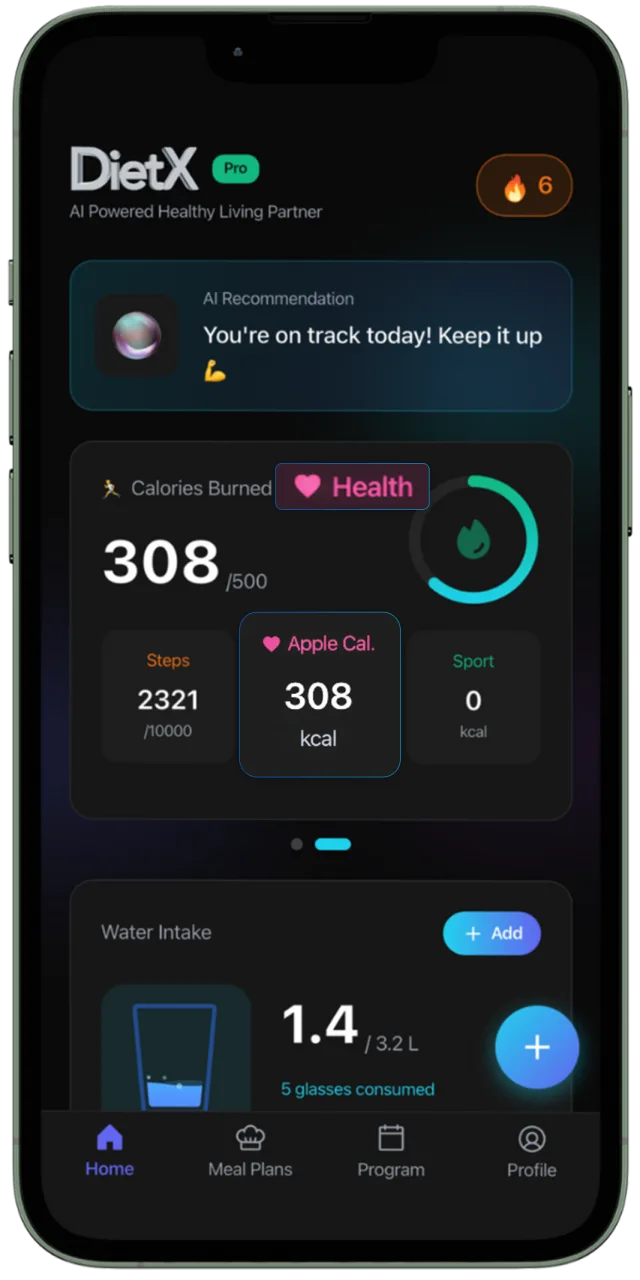
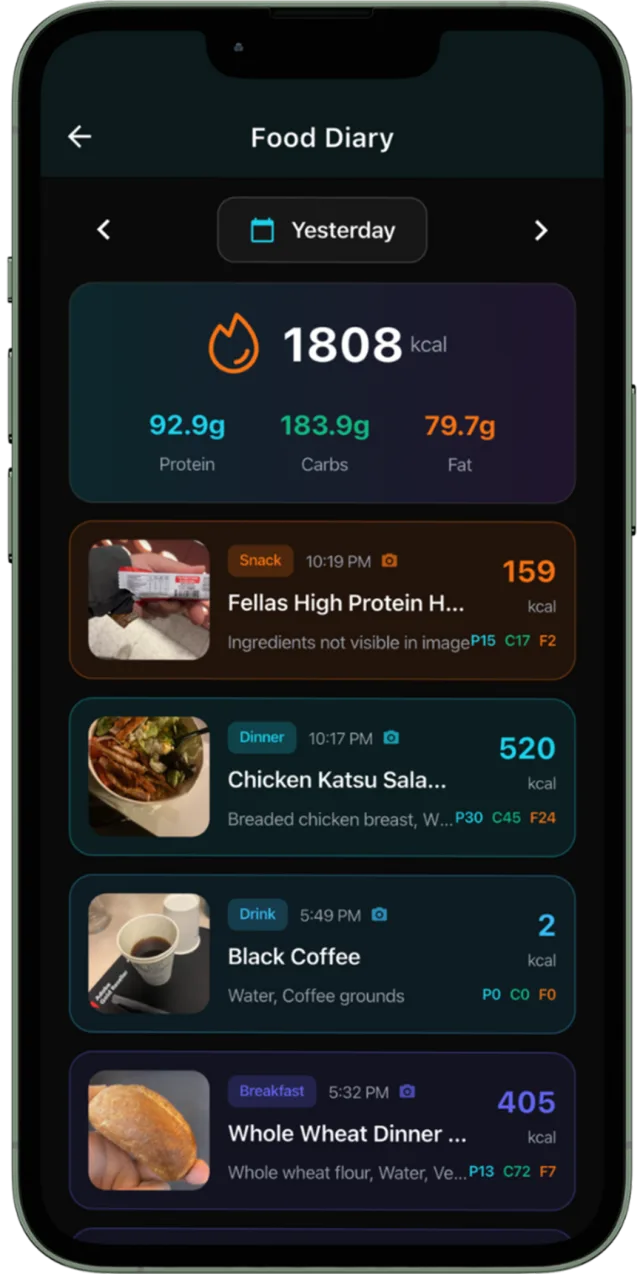
If you already log food, DietX lets you follow your weight and trends next to your meals, water and sleep, so you can check a jump against what happened that week. It's free to download with a free trial, and Premium is a subscription.
Frequently asked questions
How much can your weight fluctuate in a day?
There’s no single normal figure, because it depends on what you ate and drank and on your routine. Even 500 ml of water weighs 500 g until your body passes it. A few weeks of weigh-ins will show you your own usual range, and weekly averages will show you the trend.
Why did I gain 2 pounds overnight?
It’s very likely water and food still in your gut. By the common shortcut of 3,500 kcal per pound, 2 lb of fat would take about 7,000 kcal on top of what you burned. A salty meal, a late dinner or more carbs than usual are far more likely explanations.
What time of day should I weigh myself?
Morning works well for most people: after the bathroom, before eating or drinking, in similar clothing, on the same scale. Keeping the conditions the same matters most, because it makes your readings comparable.
Is it OK to weigh myself every day?
For many people, yes. A systematic review found regular self-weighing was associated with more weight loss and not with negative psychological outcomes. If the scale distresses you, though, it’s fine to weigh less often or stop.
Does your period make your weight go up?
It can, because of fluid. In one study, self-rated fluid retention peaked on the first day of the period. Compare your weight with the same point in your last cycle instead of with last week.
Sources
- Hall et al. (2011), Lancet: Quantification of the effect of energy imbalance on bodyweight
- White et al. (2011), Obstet Gynecol Int: Fluid retention over the menstrual cycle
- Orsama et al. (2014), Obes Facts: Weight rhythms across the week
- NHS: Tips to help you lose weight
- Zheng et al. (2015), Obesity: Self-weighing in weight management, a systematic review
- NHS: Eating disorders
General information, not medical advice. Talk to a doctor or dietitian before changing your diet, especially if you are pregnant, under 18 or have a health condition. If tracking food makes you anxious or you have a history of disordered eating, please skip calorie counting and ask a professional for support.