How to Count Calories When Eating Out: 7 Practical Rules
By the DietX team · Updated · 6 min read
To count calories when eating out, use the menu's calorie figure if there is one, otherwise log a photo or description and correct it for oil, sauces and sides. Treat the result as a good guess: in a study of 269 restaurant foods, stated calories were accurate overall, but 19% of the foods had at least 100 kcal more per portion than stated.
Below are seven practical rules, a worked dinner, and what to do with takeout and work lunches.
How to count calories when eating out: 7 rules
1. Use the menu's figure when there is one
Many chains print calories on the menu or publish them online. Start there, then add whatever you changed: extra cheese, a side, a sauce. Your entry should describe the meal you ate, which may not be the one on the menu.
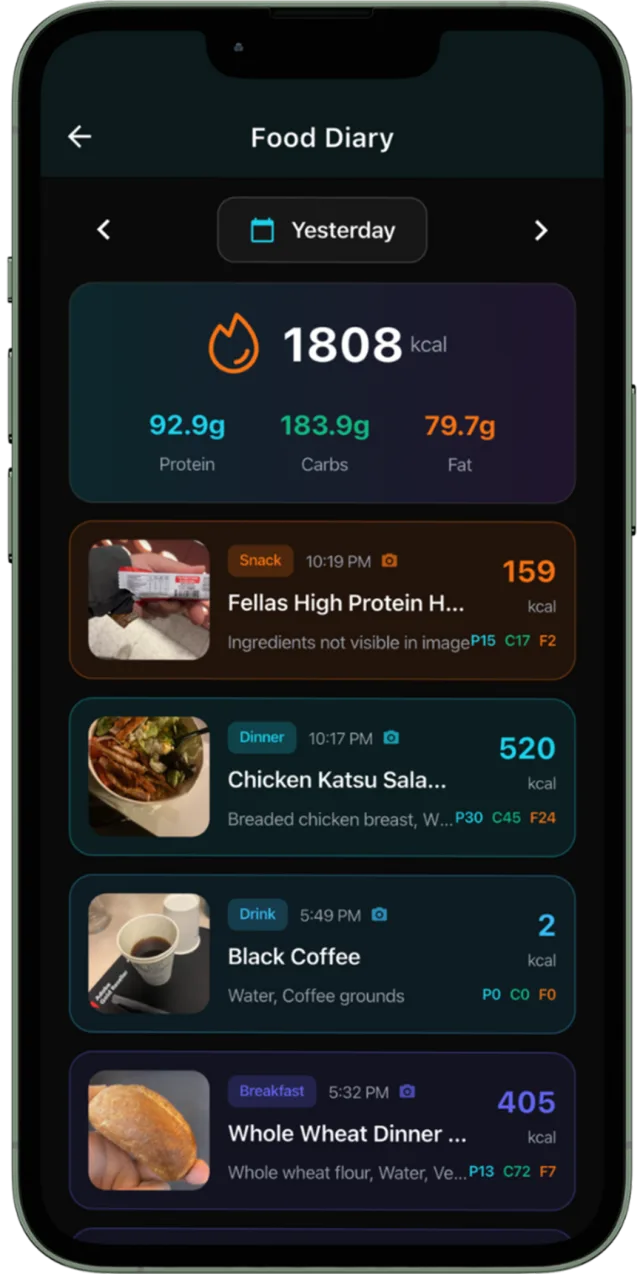
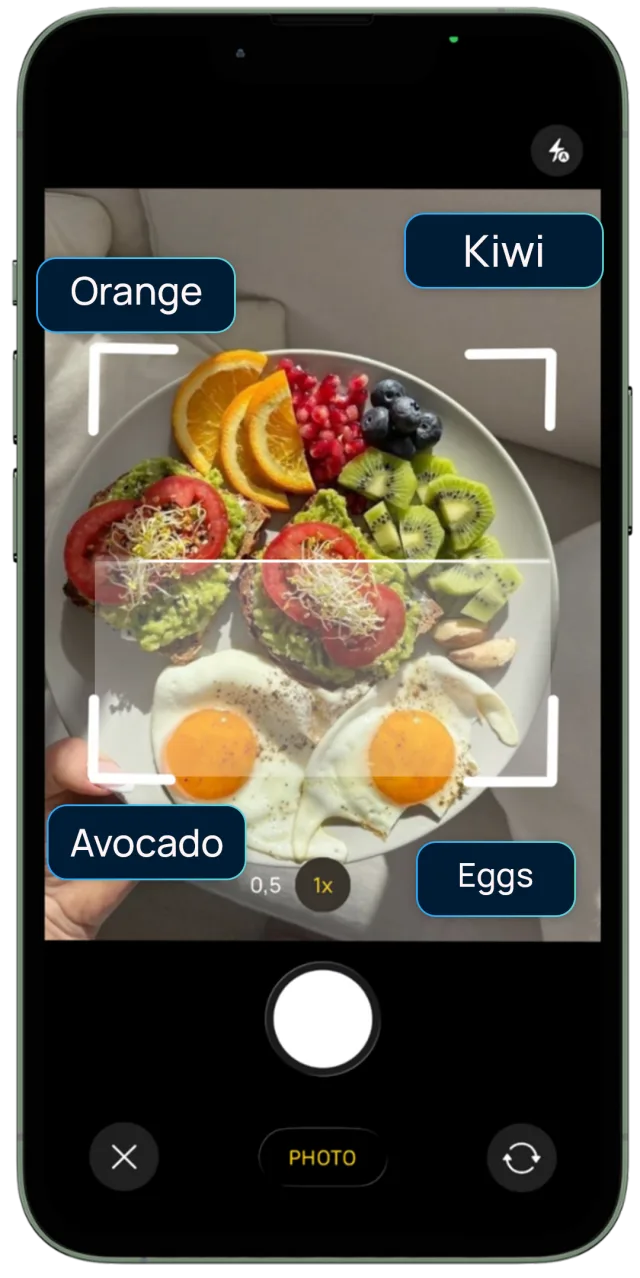
2. Take a photo, then correct it
A photo gives you a starting point when there's no figure to use. Take it before your first bite, then review it. In a validation of one image-recognition app, results improved when users corrected them by hand, and a study of ChatGPT on meal photos found it weak on medium and large portions, with a tendency to underestimate. So check the portions first, and go through what a photo can't see. In a dark room, describe the meal instead.
3. Ask for sauces and dressings on the side
This puts you in control of the amount and makes it easier to log. Dip your fork, or use a spoon, and log what you used. An oil-based dressing is mostly oil, and one tablespoon of olive oil is about 120 kcal (USDA).
4. Count only your share of shared plates
Estimate the whole dish, divide by the people sharing, then adjust for what you really ate. Say a dish is listed at 1,200 kcal and three of you share it. An even share is 400 kcal. If you ate about half, log 600 kcal. For tapas or a shared table, log the dishes you touched and give each a rough share.
5. Log the free extras
The bread basket, chips and free sides are easy to forget. A study of restaurant foods found that free side dishes pushed some meals much higher. By USDA values, 50 g of whole-wheat bread is 126 kcal, and 10 g of butter adds about 72 kcal, so one piece of bread with butter is about 198 kcal.
6. Allow for cooking fat
You can't see the butter on the vegetables or the oil in the pan, and you have no way of knowing how much the kitchen used. For anything fried or sautéed, we suggest adding a tablespoon of oil, about 120 kcal, as a rough habit. That's our own rule of thumb, with no study behind it, so adjust it if the food looks very oily or very plain.
7. Log your drinks
The NHS puts a 175 ml glass of 12% wine at up to 158 kcal and a pint of 5% beer at up to 222 kcal. Two pints come to up to 444 kcal. Our guide to calories in alcohol has more, including mixers.
A worked example: one restaurant dinner
Here is how the rules play out, using USDA values and the NHS wine figure. The amounts are our own example.
| Item | Amount | kcal |
|---|---|---|
| Salmon, cooked | 180 g | 371 |
| Potato, boiled | 200 g | 172 |
| Broccoli, boiled | 100 g | 35 |
| The plate you see | 578 | |
| Cooking fat allowance | 1 tbsp oil | about 120 |
| Whole-wheat bread | 50 g | 126 |
| Butter on the bread | 10 g | about 72 |
| Wine, 12% | 175 ml | up to 158 |
| The whole meal | up to about 1,054 |
The extras add up to about 476 kcal, or 82% on top of the plate. If you only logged what was on the plate, you'd have recorded a little over half of the meal.
How accurate are restaurant calories?
Better than you might fear, and less exact than they look. In the study of 269 foods, the average difference from the stated figure was only 10 kcal a portion, but about one food in five (19%) carried at least 100 kcal more per portion than stated. An earlier, smaller study measured 29 restaurant foods at 18% above their stated calories on average. On a 600 kcal dish, 18% would be 108 kcal.
So a menu figure is a good place to start, and it's fine to round it up a little when the portion looks generous. Our list of common calorie counting mistakes covers similar traps at home.
How to count calories for takeout
Takeout is easier than sitting in a restaurant, because you get the food at home.
- Plate it. Foil trays hide depth and portion. On a plate, the food is visible for a photo, and you can weigh it if you like.
- Weigh what you're eating. If you have a kitchen scale, it can tell you how much rice you really got.
- Check the order page. Some chains show calories in their ordering app or on their site, so note the figure before you throw the bag away.
- Log leftovers as leftovers. If you eat half tonight, log half tonight and the rest when you eat it.
How to log work lunches
A work lunch has one big advantage: repetition.
- Work out your usual order once. Take your time over one good estimate, then reuse that figure instead of guessing fresh each day.
- Break down cafeteria plates. Log the parts as separate items: protein, starch, vegetables, sauce.
- Bring your own a few times a week. You'll know exactly what's in it, and it can pull your weekly average into line.
- Log meetings and snacks. The pastries in the morning meeting count too.
How much does a wrong guess matter?
Less than it feels like at the table. If you eat around 2,000 kcal a day, your week is about 14,000 kcal, so a 200 kcal miss on one dinner is about 1.4% of it. What matters more is whether you log meals out at all, since leaving them blank is the bigger error.
Please don't try to pay for a big meal by skipping food the next day. Weight tends to rise on weekends and fall during the week, and a bump after a meal out is normal. Go back to your usual eating and look at the weekly trend. If you are pregnant or have a medical condition, talk to a professional about any plan to cut calories, and please avoid extreme restriction.
If you want a quicker way to do all this, DietX lets you log a meal by photo, description or voice and edit any item before saving. It's free to download with a free trial, and Premium is a subscription. The estimates still need your eye, especially on the oil and sauces you can't see.
Frequently asked questions
How do you estimate calories when eating out?
Use the menu or the chain’s published figure if there is one. If not, log a photo or description of the closest match and correct it for portions. Then add cooking fat, sauces, sides, bread and drinks, which are the parts most likely to be missed.
Are the calories on restaurant menus accurate?
Accurate overall, with exceptions. In a study of 269 restaurant foods, the average difference was about 10 kcal a portion, but 19% had at least 100 kcal more per portion than stated. Treat a menu figure as a good estimate.
How do I log a shared meal?
Estimate the whole dish, divide by the number of people, then adjust for what you really ate. If three people share a 1,200 kcal dish and you eat about half, log 600 kcal instead of 400.
Should I add extra calories for restaurant food?
It’s a sensible habit when you can’t see how much fat went in. As a rough rule of our own, add a tablespoon of oil, about 120 kcal, to anything fried or sautéed if the meal has no published figure.
Does one restaurant meal ruin my progress?
One meal is a small part of your week. A 200 kcal miss is about 1.4% of a 14,000 kcal week. Go back to your usual eating without skipping meals, and judge your progress from the trend over several weeks.
Sources
- Urban et al. (2011), JAMA: Accuracy of stated energy contents of restaurant foods
- Nutrient and food group prediction by image recognition in a smartphone app (2022), JMIR Form Res
- An evaluation of ChatGPT for nutrient content estimation from meal photographs (2025), Nutrients
- USDA FoodData Central (SR Legacy)
- Urban et al. (2010), J Am Diet Assoc: Stated energy contents of reduced-energy foods
- NHS: Calories in alcohol
- Orsama et al. (2014), Obes Facts: Weight rhythms across the week
General information, not medical advice. Talk to a doctor or dietitian before changing your diet, especially if you are pregnant, under 18 or have a health condition. If tracking food makes you anxious or you have a history of disordered eating, please skip calorie counting and ask a professional for support.