Photold
How to Preserve Old Family Photos at Home
By the Photold team · · 6 min read

To preserve old photos, keep them cool, dry and at a steady temperature, in photo-safe boxes and sleeves, away from attics, basements and outside walls. Handle them by the edges, and keep tape, glue, rubber bands and paper clips off them. That covers most of what archives advise.
You do not need a special room. A closet on an inside wall does the job in many homes. Below are the figures from the Library of Congress and the US National Archives, how to apply them at home, and what to do about the rubber bands already on your photos.
What the Library of Congress and National Archives advise
| Topic | Library of Congress | National Archives | Aim for |
|---|---|---|---|
| Temperature | 21°C / 70°F or below | Below 24°C / 75°F | 21°C / 70°F or below |
| Relative humidity | 30 to 50% | Below 65% to prevent mold, and not below 15% (brittleness) | 30 to 50% |
| Places to avoid | Attics, basements, vents, fireplaces, radiators, exterior walls | Damp basements, garages, hot attics | All of these |
| Boxes and enclosures | Photo-safe: ISO 18902, Photographic Activity Test (PAT) | Lignin-free, acid-free or buffered boxes that passed the PAT | A label that names the PAT |
| Plastics | Uncoated polyester, polyethylene, polypropylene | Polyester L-sleeves for brittle or torn items. Avoid PVC and unknown plastics | These three, never PVC |
| Albums | Avoid colored, "magnetic" or sticky self-adhesive pages | Avoid magnetic albums | None of these |
| On the photo | No self-adhesive tape, sticky notes, glue, paper clips or rubber bands | Avoid degraded tape and rubber bands | Nothing attached |
The two differ slightly. The National Archives figures work as outer limits: below 65% humidity to prevent mold, and not below 15% to prevent brittleness. The Library of Congress figures are tighter. Aim for the stricter one, and treat the looser number as the line you do not want to cross in a heat wave.
Color prints and negatives need it colder
The Library of Congress says relative humidity is the single most important factor for most prints, but for color photos and film negatives temperature is the controlling factor, with 4°C / 40°F or below recommended. No living room reaches that, so give these the coolest stable spot you have. If a negative or color print really matters, ask a conservator about cold storage before you try a household fridge, since damp is what you are trying to avoid.
Where to keep photos in a real home
- Good: a closet or cupboard on an inside wall, on a floor you live on. A bedroom wardrobe often works. Keep boxes off the floor in case of a leak.
- Avoid: attics, basements, garages, and anywhere near a vent, fireplace, radiator or exterior wall. Kitchens and bathrooms fail for the same reasons: heat and damp.
- On the wall: strong sun can fade a print, so frame a copy and keep the print in its box.
Steadiness counts as well as the number. If you are unsure about a spot, leave a small digital thermometer with a humidity reading there for a couple of weeks, through a change in the weather. If it swings widely, try somewhere else.
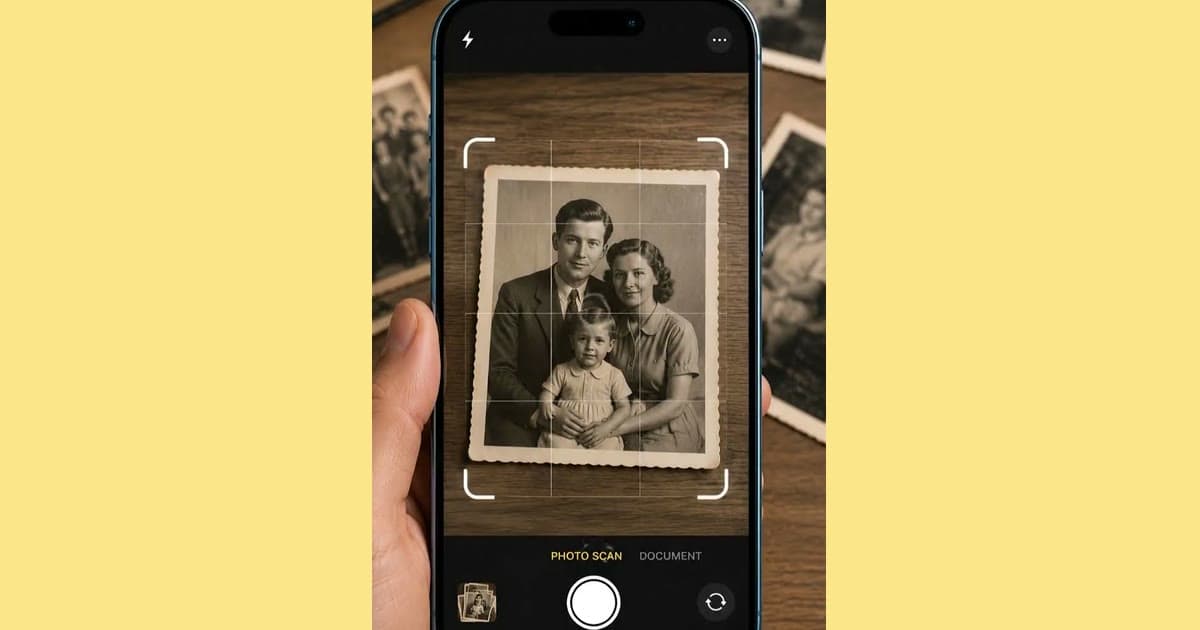
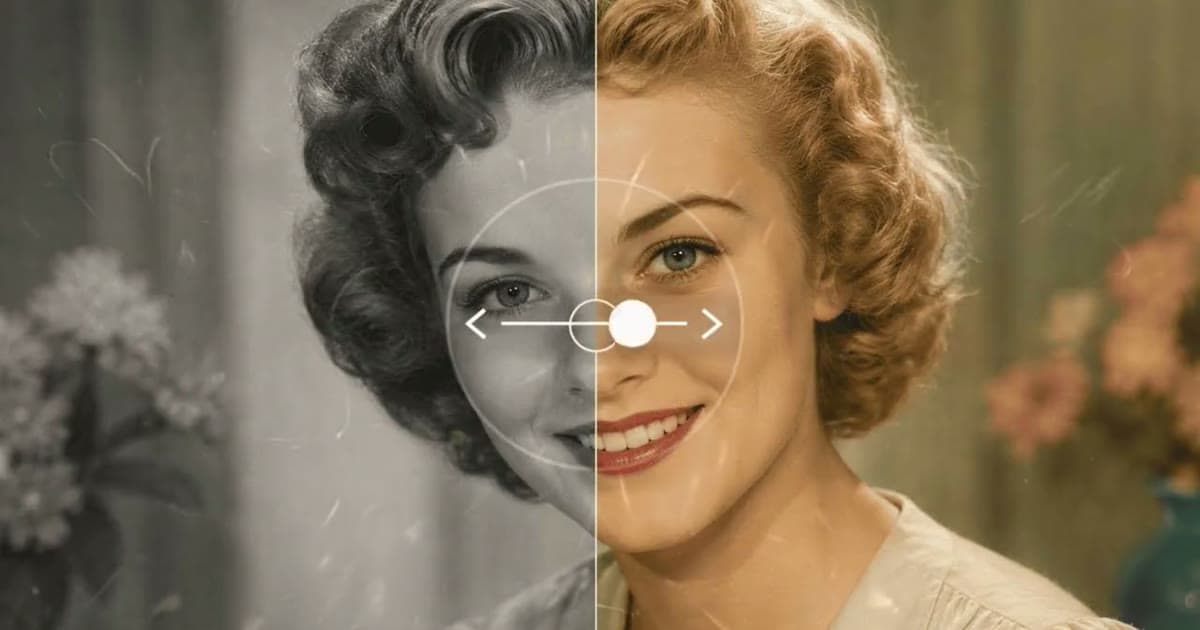
Repair a scan of a damaged print in Photold while the print itself stays safe in its box.Try Photold
What to buy
You do not need much. Look for the test on the label: ISO 18902 or the Photographic Activity Test. "Acid-free" alone does not tell you a product passed it.
- Boxes: lignin-free, acid-free or buffered, and passed the PAT.
- Sleeves: uncoated polyester, polyethylene or polypropylene. Skip PVC and any plastic you cannot identify.
- Polyester L-sleeves: for brittle or torn items, which should not be handled more than necessary.
- An air bulb and clean nitrile gloves: for dust and handling.
- An album, if you want one: with plain photo-safe pages, never colored, "magnetic" or sticky ones.
What to remove, and what to leave alone
The rule is simple. If it comes away without force, take it off. If it resists, stop.
| What you find | What to do |
|---|---|
| Rubber bands and paper clips | Take them off gently. If a perished band has stuck to a print, leave it and ask a conservator |
| Sticky notes | Lift them slowly if they release easily, and move the information to the sleeve or box |
| Old tape | Do not pull it. Repair the tear on a scan instead |
| Photos stuck to a magnetic album | Do not pry them off. Photograph them in place |
| Loose dust | Use an air bulb, not canned air. Even soft brushes can scratch |
| Negatives stored with prints | Move them to their own box, as some give off harmful gases |
| Wet or moldy photos | Act quickly: the Library of Congress says mold can start in as little as 48 hours. See rescuing water-damaged photos |
Whatever you are doing, hold photos by the edges, with clean hands or clean nitrile gloves, and do not touch the image. The National Archives warns that fingerprints can cause permanent stains.

Why digital copies are insurance, not a replacement
A scan protects the picture against fire, flood and loss, and a tool such as Photold can repair that copy without touching the print. But the print can be scanned again with better equipment, and it carries handwriting and other marks that a file can lose. Digital files need care too. The Library of Congress advises at least two copies, on separate media, as far apart as practical, checked at least once a year and renewed every five years or when necessary.
So keep both. Our plan for digitizing a whole collection covers the scanning, and our guide to faded and yellowed photos covers what you can do when a print has already changed.
If you only have an afternoon
- Move every box out of the attic, basement and garage.
- Take off rubber bands and clips that come away easily.
- Put negatives in their own box.
- Move the photos you care about most into a photo-safe box.
- Scan those first.
Frequently asked questions
What is the best temperature and humidity for storing old photos?
Aim for 21°C / 70°F or below and 30 to 50% relative humidity, the Library of Congress figures. Stable conditions matter too, so avoid places that swing with the seasons.
Are plastic photo sleeves safe?
Some are. The Library of Congress names uncoated polyester, polyethylene and polypropylene as suitable. Avoid PVC and any plastic you cannot identify.
Should I wear gloves to handle old photos?
Clean hands or clean nitrile gloves both work, according to the Library of Congress. Hold the photo by its edges and do not touch the image, because fingerprints can cause permanent stains.
Should I store negatives with prints?
No. Keep them separate, because some negatives give off harmful gases. Temperature matters most for film, so give them the coolest stable spot you have.
Are old magnetic photo albums bad for photos?
Both the Library of Congress and the National Archives say to avoid them. Do not buy new ones, and do not pry stuck photos out of old ones. Photograph them in place, and ask a conservator about important ones.